
Getting used to your denture
A new denture feels strange for the first few weeks, even when it fits well. That is normal and it passes. Below you can read what happens and how to make it easier for yourself.
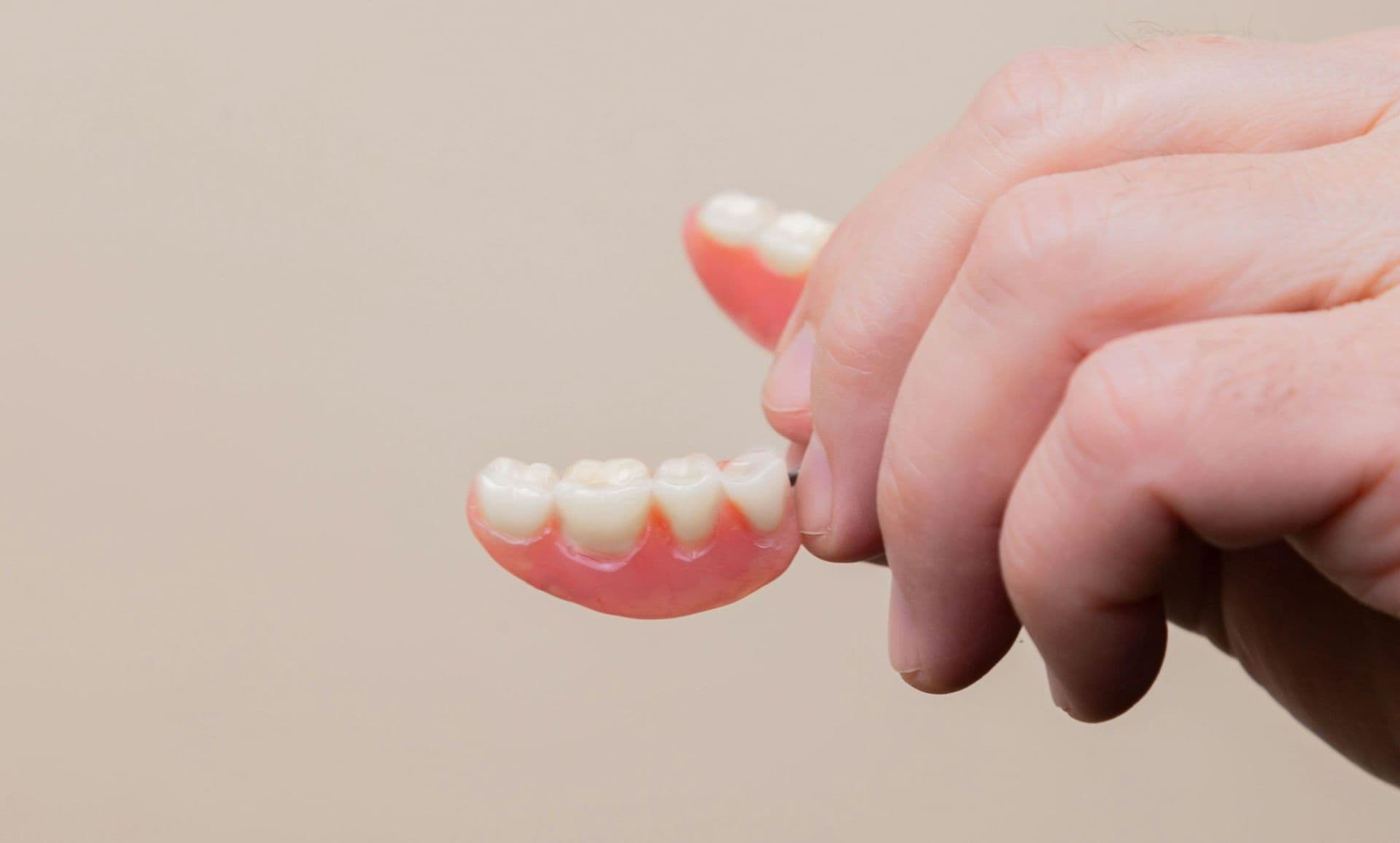
Build up slowly
Chewing with a denture is a different movement than with your own teeth. Your mouth has to learn it again; most people take a few weeks to two months.
- Start with soft food and make it firmer step by step. There is no need for a liquid diet.
- Cut your food into small pieces and chew on both sides at the same time. That keeps the denture in place better.
- Biting with your front teeth is difficult at first. Break bread or fruit by hand first.
- Be careful with hot coffee or soup. An upper denture covers the roof of your mouth, so you feel heat later.
- Do you bite your cheek or tongue now and then? That fades once your muscles are used to the new shape.
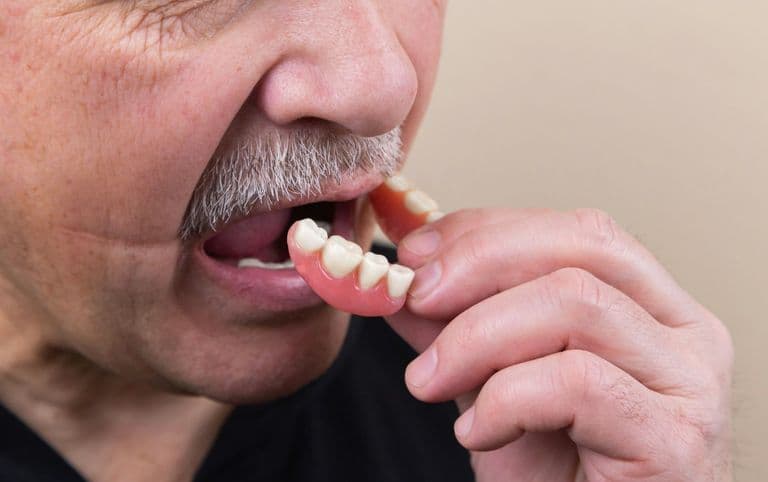
Your voice adjusts too
Your tongue has to discover where the teeth are now. The s, z, f, v, t and d sounds in particular can sound different for the first few days.
- Read aloud for a few minutes every day, for example from the newspaper.
- Repeat words with the tricky sounds slowly and clearly.
- If someone asks you to repeat something, do not let it bother you. Usually you sound like yourself again within a few days to weeks.

What you may notice in the first weeks
Food tastes different
Because the plate covers the roof of your mouth, you sometimes taste less. This usually recovers by itself.
More or less saliva
Your mouth reacts to something new with extra saliva, or with a dry feeling instead. You get used to it.
Your face looks fuller
A new denture often supports your lips and cheeks better. Mostly, other people notice that you look fresher.
Tired chewing muscles
Your muscles work differently than you are used to. A few days of sore muscles is normal; keep wearing the denture.
How to keep your denture clean
A clean denture prevents a bad taste, bad breath and irritated gums. It takes you a few minutes a day.
- Rinse the denture after eating and brush it at least once a day with a denture brush.
- Use soap, dish soap or a denture cleaner. Regular toothpaste makes the surface rough, so dirt sticks to it more easily.
- Put a towel in the sink or leave a little water in it. If the denture falls, it will not break.
- No hot water, bleach or scouring products, and never scrape it with anything sharp.
- Bothered by a hard, yellowish buildup? That is tartar. Soaking it overnight in ordinary white vinegar usually helps; rinse it well afterwards.
- Take the denture out at night so your gums can rest, and keep it in a clean container.
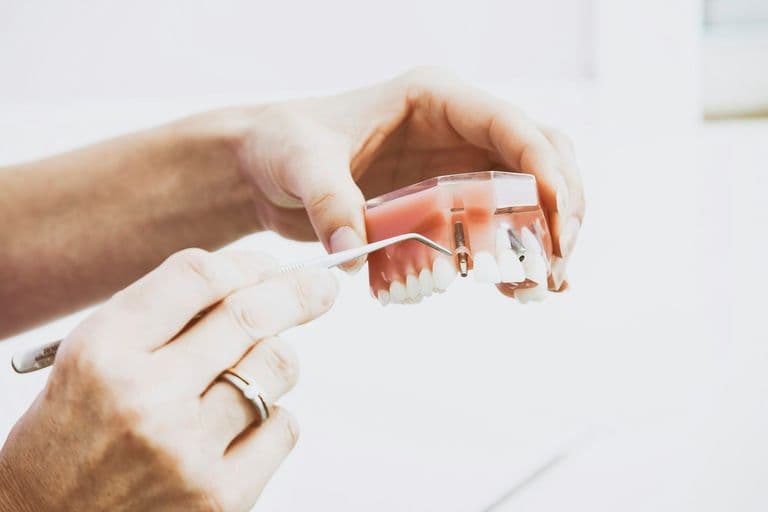
Even without teeth, you still brush
Under the denture, your mouth is living tissue that needs care. If you still have some of your own teeth or implants, they deserve extra attention.
- In the morning and evening, gently brush your gums, palate and tongue with a soft toothbrush, without the denture in.
- Your own teeth next to a partial denture: brush them well, especially where the clasps rest, and clean between them with interdental brushes or floss.
- Implant-retained denture: brush the snap attachments or the bar twice a day from all sides. An interdental brush works best under a bar.
- Healthy gums are pink, firm and do not bleed when you brush. If you notice anything different, let us know.
Good to know
Questions about getting used to it
My denture is pressing. Can I remove a bit myself?
No, never file or grind it yourself: it will often fit worse afterwards. Give us a call. If you can, wear the denture for a few hours before the appointment, so we can see exactly where it presses.
My lower denture does not stay in place. Why is that?
The lower jaw is narrow and has no palate for the denture to create suction against. Your tongue and cheeks also keep pushing against it. Many people learn to manage. If it really does not work, make an appointment, with no obligation: the denturist will explain what the options are for you.
My new denture is hard to take out. Is that a problem?
No, it mostly means that it fits snugly. Rinse your mouth with a little water and gently wiggle the denture loose; then it releases more easily.
Do I need denture adhesive?
A well-fitting denture usually does not need it. If you notice that you are using more and more adhesive, the denture has probably become looser. Have it checked.
When should I call?
If a sore spot or wound does not get better after a few days, if eating still does not work after a few weeks, or if something breaks. Do not just put up with it: often a small adjustment is all it takes.
Something not right?
A sore spot, a loose denture or just a question: feel free to call us. That is what aftercare is for.